

By Sam Bennett
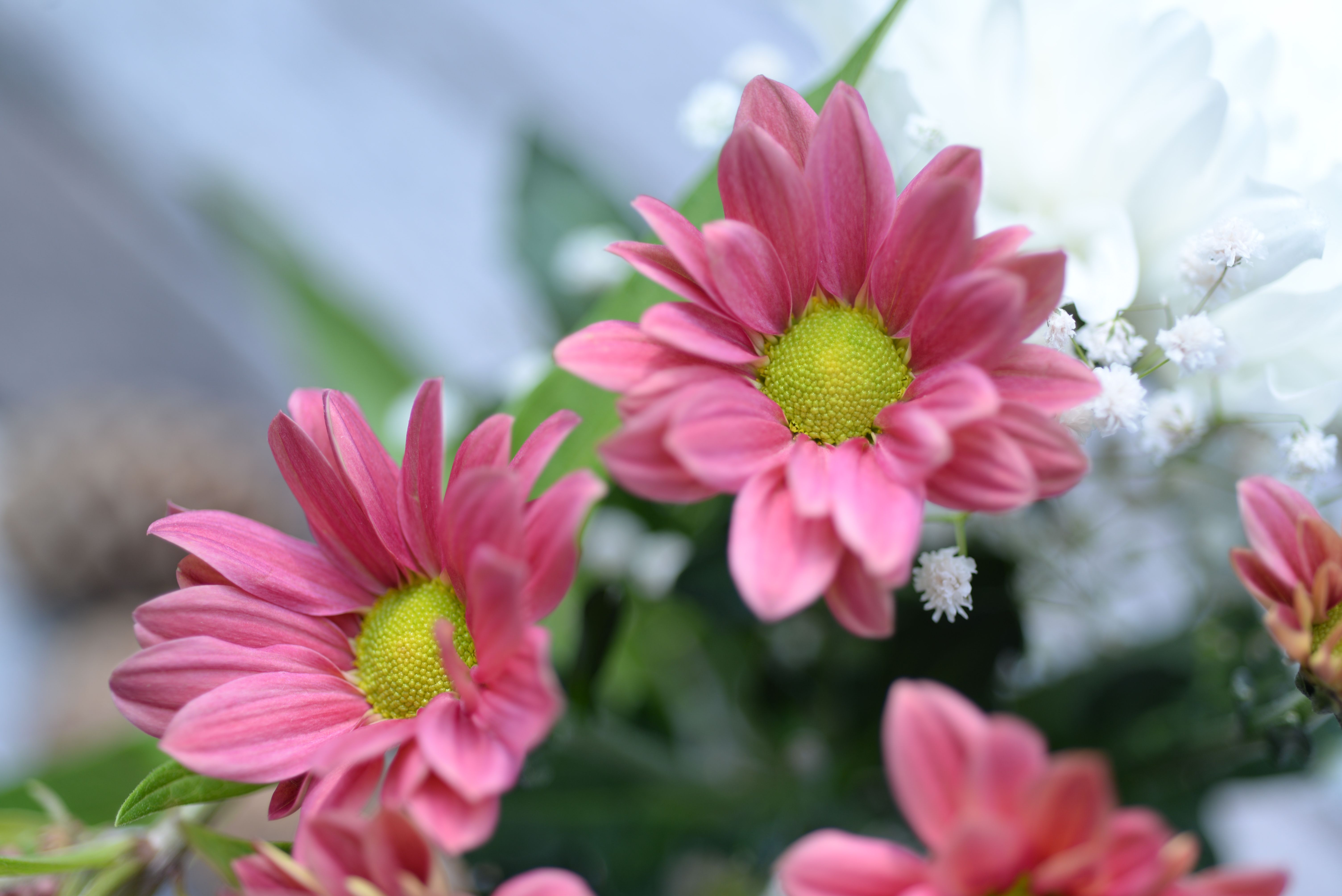
A long time ago, in a small Indiana city, I met a teacher who convinced me of the unparalleled beauty of cut flowers. It was a lesson from his mother, and I have it on good authority that, if one were to carry an artificial, plastic flower over the threshold and into her home, little crevices of disappointment would sink between her eyes and cheekbones as she furrowed her brows. Given that they were artificial flowers, nothing about their odor would contribute to her facial contortion. But if you asked her, they still stunk.
When you snip the stem of a living peony, rose, or geranium, you have accomplished a couple of things. First, you’ve captured something beautiful without much difficulty. We humans love doing that! There’s basically no risk associated with this labor’s reward. But the second thing you’ve done (and I apologize in advance if you’ve never thought about things this way) is to set a sort of doomsday clock for the flower. “30 seconds to midnight,” you might whisper to the petals, supposing that they operate like the plant’s ears. If you’re a good friend to the flower, you’ll do like my teacher’s mother did, that is, take it home, dunk its wounded stem in cold water, and make it the centerpiece of a dining room table. This is the difficult part, not the capturing, but the caring-for. And as much as this is celebration of life, it is also a celebration of expiration. Before too long, that flower will forget its beauty and you will have do the easy thing of capturing another before doing the difficult thing again.
Considering all of this trouble, and I don’t just mean the work you’ve done to snip and bear the beauty home, but I also mean the trouble you’ve put the flower through by fast-tracking its impermanence, you might ask the question: Why bother (with extracting) the flower at all? There is at least one alternative. It’s likely that you’ve been in an office before, be it doctor’s, dentist’s, or lawyer’s, and at some point your eyes fell on a translucent vase filled halfway with glistening pebbles locking several plastic stems into place, stems whose tops bear striking resemblance to the beautiful petals to whom you were whispering doomsday earlier. How do these arrangements make you feel? Have you ever grazed one of these imitation flowers with a fingertip and discovered the dust that’s accumulated? It’s a pretty good imitation, but nobody captured it. It’s got no impermanence. Nobody cares for it. The tension between ease and difficulty from before is lost.
Maybe you’re not like me. But if you are, then the following hypothetical scenario will strike you as gravely unpleasant. All of a sudden, an edict comes down from someone with all the power to enforce it: From this day forward, you will no longer differentiate between cut flowers and their imitations; you will evaluate them on equal terms. Anyone who disobeys and continues in the insistence that cut flowers are “really” beautiful, while artificial arrangements are not, is no admirer of beauty at all, but merely an obstacle in the way of aesthetic progress.
What an outlandish thought experiment! Could one really expect popular support for such an edict? Would admirers of beauty even be capable of collapsing the differences between cut flowers and their imitations?
Set the flowery language off to one side for now and let’s match it with aesthetic reality on the other. The flower represents your artistry and its vulnerability. Snipping the stem and capturing it stands for becoming aware of your artistry and its vulnerability. Plunging the flower into the vase picks out the way you frame your artwork and present it. And when the flower withers, fades in color, droops with its tongue out over the vase’s rim, this represents one of your beautiful accomplishments having run its course. When “30 seconds to midnight” was half a minute ago, we are compelled to enter the garden and start the process all over again.
There is at least one alternative. Artificial artistry has had its advent. You see, we can call plastic petals “petals” without meaning that’s what they really are. Most of us have no trouble making the distinction. But what is happening today when we call an artificial song a “song”? Are we marking a contrast like the one between “petal” and petal? Or are we swearing implicit oaths to the effect that there is no difference? Perhaps we, to echo John Prine’s “Paradise,” are eager to record this new artificial era as evidence of the musical “progress of man.” Still others might be ready to reject as progress anything that threatens the relationships between writers, musicians, and audiences. Perhaps we, to echo a character in Kurt Vonnegut’s Player Piano, in which a supercomputer has been given power over all American aesthetic decision-making, should be asking the question, “What are people for?”
Have we patience enough to let the flowers grow?